

History of the temple
Some description text for this item
Sri Murali Manohar Swamy Temple is situated at Kishanbagh, Bahadurpura, Hyderabad is an ancient and historical monument of Lord Shri Krishna. It was constructed by late Sri Raja Ragho Ramji. The principle deity “Sri Krishna” mool virat was consecrated by the 27th Jeera, Ahobilam Matha in the year 1822. It is said that the Original Founder Late Sri Raja Ragho Ramji dreamt about the moola virat and came in search and unearthed the divine deity at Kishan Bagh 5ft below the ground (Swayambhu) thereon constructed this vast temple where the divine deity is worshipped in the form of Lord Sri Venu Gopala Swamy.
The Temple is an amalgamation of regional architectural expression of different era’s including the Kakatiya period (puratina bavi), Vijayanagar period, Tanjore period, Mughal and Maratha influence and containing elements with all its scale, planning, form; building material including basalt rock, Pustaki vit (thin sized brick), bricks and lime; and
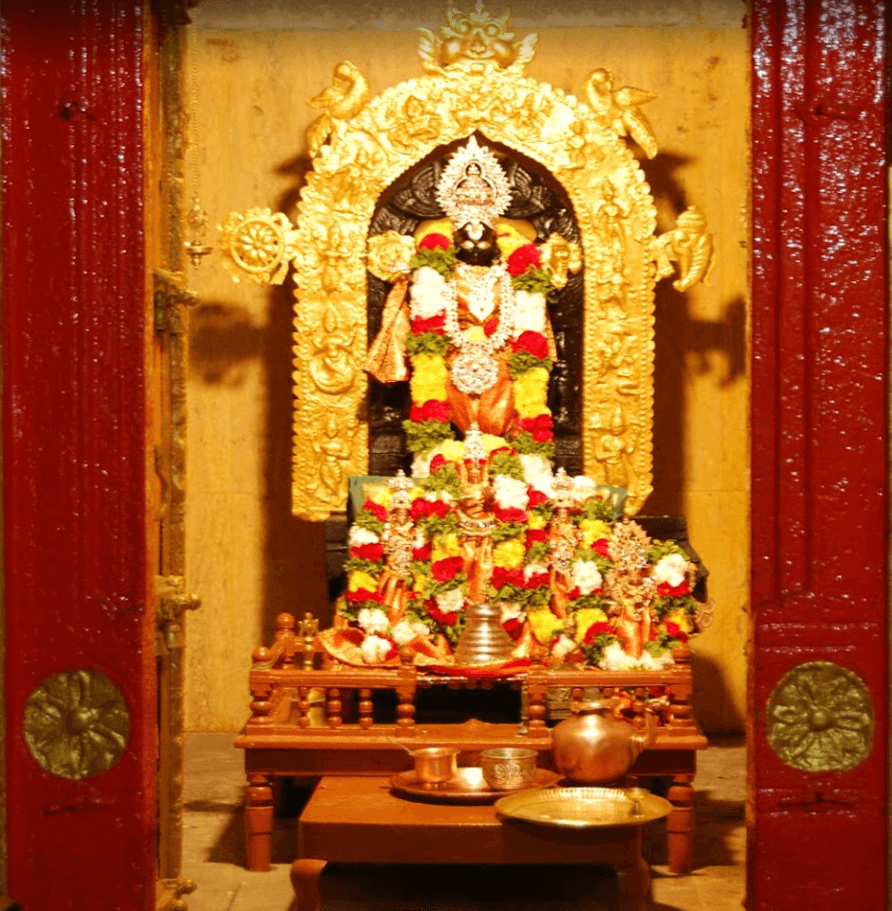
construction technique of the Deccan. The temple is a depiction of stylistic shift in the temple architecture of the region under the influence of Nizam around the turn of the 19th century. The quality of the carving and sculpture in the Shikhara are exceptional; unsurpassed in the tradition that ensued, as estimated by historians and restoration experts.
The Temple is a living heritage being one of the few examples of the Hindu religious structures still existing within Hyderabad city.
Kishan Bagh Kashi Bugga Temple
Some description text for this item
The ancient Kashibugga temple is located at the bank of river Musi (kishan Bagh) Hyderabad. This temple was built with rock by Sri Raja Ragho Ramji in the year 1822. Sri Rajkumar Bharat Lalji is the hereditary trustee from the founder family. The main deity of this temple is Lord Shiva. The Shiva lingam is located underground.
Registration of The Temple Sri Murali Manohar Swamy , alias Kishan Bagh Temple situated at Bahdurpura , Hyderabad with its landed property entered in the Book of Endowments , vide “The Andhra Pradesh Gazette” Notification on February 13, 1964. Since then, the Temple was brought under the administrative control of the Endowments Department, the then Government of Andhra Pradesh.
Currently the Temple is under the Administrative Control of the Deputy Commissioner, Endowments Department, Hyderabad, Telangana State, categorised as 6b Temple.
The temple premise is in a compounded area of around 3 Acres at Kishan Bagh. The temple from the interior was also showing signs of disrepair and dilapidated condition due to lack of upkeep and maintenance over several decades. The Garbhalaya walls, Madya Rangam, floorings, the Gopuram, Parikrama were all needing attention.
The temple once had a wooden chariot (Ratham) which broke down some time ago.
The temple complex constitutes of
- Main temple of Sri Murali Manohar Swamy being worshipped in the form of Sri Venu Gopala Swamy.
- The temple complex constitutes of sub – temples of (Shri Hanuman temple) & (Shri Mahadevji Mandir also known as Shri Narmadeshwar Mandir)
There are other sub temples outside the complex near the backs of Musi river known as Shri Kashi-Bugga temple, the presiding deity here is Lord Shiva in the form of Shivalinga along with Lord Ganesha, Maa Parvathi Devi, Brahma etc,.
There is another temple Lord Shiva situated at Radha Bagh.
The compound has two more temples dedicated to Lord Shiva and Lord Hanuman.
The rituals performed in Kishanbagh temple are similar to those in Tirumala Temple. After the annual Bramhotsavam, priests take the deity (Lord Shri Krishna) in a procession to the well for a holy dip in main temple Sanctum Santorum, known as “Chakra Teertham “.
The Kashi-Bugga temple lodges the sacred well known as Shri Somatheertam where the water flow continuously round the clock, performing Nitya Abhisekam to the Shiva lingam.
The Dwaja Sthambham pooja is of great significance in this temple as the devotees believe that childless couples get children after praying and offering prasadam as offering to the Dwaja Sthambham.
The temple has a glorious past, the region gets its name “Kishanbagh” from the existence of temple- in the name of presiding deity – Lord Sri Krishna. It was a hub of more than 40 villages, thousands of people from these villages would travel from far to visit and celebrate the Bramhotsava, Ratha yatra, Jatra, Janmastami and other auspicious days in the Hindu calendar.
On the second day of the Bramhotsavam, Dhwajarohanam puja (gaurada pongali) which is unique and popular among devotee in particular childless couples seeking the blessing of lord Krishna be blessed with a child. This tradition and belief have been reinforced by the fact that hundreds of couples have been blessed with a child after this puja. This practice continues till today.
The tradition of temple worship and rituals established and practised over two centuries are an inseparable part of life of the people. The deity is widely worshipped by a significant number of Vaishnav followers. Thus, Sri Murali Manohar Swamy Temple and the complex can be firmly associated with a historical significance.
1) Makara Sankranthi
2) Maha Shivaratri
3) holi
4) Ugadi
5) Sri Hanuman Jayanthi
6) Sri Krishna Janmastami ( main festival )
7) Jatara – Bramhotsavam
8) Dussehra
9) Deepavali
Learn About Our
Capabilities
Phasellus et ipsum justo. Aenean fringilla a fermentum mauris non venenatis. Praesent at nulla aliquam, fermentum ligula a eget, fermentum metus. Morbi auctor sed dui et rhoncus. Lorem ipsum dolor sit amet, consectetuer elit, sed diam nonummy nibh euismod tincidunt ut laoreet dolore magna aliquam:
Our Leadership
Team
Some description text for this item



Learn To Be Sustainably Happy!
Join the Happiness Program. Experience a calm mind, reduced anxiety increased energy levels and sustainable happiness everyday!